
Best Cattle Feed for Dairy Cows in Nepal: Complete Product Comparison Guide (2025)
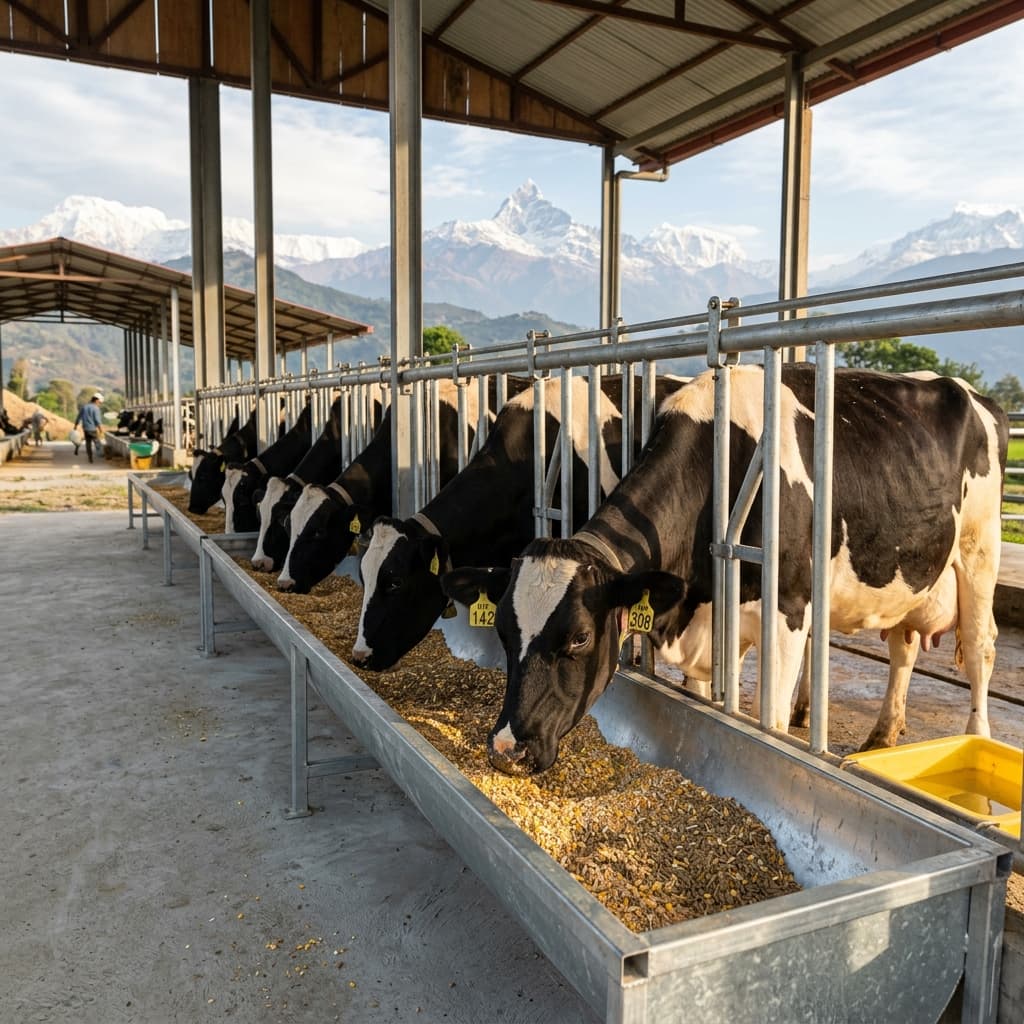
Choosing the right cattle feed is the single most leveraged decision you make for your dairy business — and in Nepal, most farmers are leaving serious money on the table by getting it wrong.
Nepal's dairy cows average just 627 kg of milk per lactation, compared to a world average exceeding 2,000 kg. A significant share of that gap comes down to nutrition — specifically, feeding rations that are too low in digestible protein and energy to support peak milk production. Commercially formulated concentrates have been shown to dramatically outperform homemade rations, yet most Nepalese smallholders still rely on inconsistent mixes of bran, oilcake, and crop residues.
This guide compares all four cattle feeds manufactured by Nandani Agro Industries — the makers of the Vanjula and Siddhartha brands — with exact nutritional specifications, feeding rates, use-case guidance, and a clear recommendation for every type of dairy farmer. Whether you run 2 crossbred cows or 30 high-yielding Holsteins, this comparison will show you exactly which feed fits your herd — and why.
Key Takeaways
- Scientifically formulated commercial feed consistently outperforms homemade rations in milk yield because it delivers the same nutrient profile daily — eliminating the inconsistency that suppresses production.
- Early-lactation cows need 18–22% crude protein in their concentrate — peak lactation demands the highest protein of any stage (Oregon State University Extension).
- Vanjula HighPro (22% CP) is Nepal's highest-protein commercial dairy concentrate for peak-lactation crossbred cattle.
- Bypass protein technology in Vanjula Bypass increased daily milk yield from 8.1 kg to 10.5 kg per cow in Nepalese field trials — a 28% improvement (Nepalese Journal of Agricultural Sciences, 2013).
Why Does Feed Choice Matter So Much for Nepali Dairy Cows?
Before comparing products, it's worth understanding what's actually happening inside your cow when she eats.
A dairy cow producing 10 litres of milk daily needs roughly 1 kg of crude protein, 20+ MJ of metabolisable energy, and correct calcium-to-phosphorus ratios — every single day. If any one of these falls short, milk synthesis drops immediately. The cow can't "save up" nutrients from one day and use them the next.
Nepal's typical smallholder ration — rice straw, wheat bran, and 1–2 kg of homemixed oilcake — routinely falls 30–40% short of protein requirements for a lactating cow. The result is a cow milking far below her genetic potential while quietly losing body condition.
Commercial concentrate feeds solve this by delivering precisely formulated, consistent nutrition that complements your roughage base. Let's look at each Nandani Agro product in detail.
Product 1: Vanjula Pashu Aahar HighPro — Best for High-Yielding Dairy Cows
The bottom line: This is Nepal's highest-protein commercial dairy concentrate, designed for crossbred and exotic dairy cattle during peak lactation. If you own Holstein-Friesian crosses, Jersey crosses, or imported dairy breeds producing 8+ litres per day, this is your primary feed.

Vanjula HighPro — Nutritional Specifications
| Nutrient | Specification |
|---|---|
| Crude Protein | Min. 22% |
| Crude Fat | Min. 4% |
| Crude Fiber | Max. 10% |
| Moisture | Max. 11% |
Ingredients: Maize, Soya Doc, Mustard Doc, Rice Bran, Mineral Mixture, Salt, Vitamins, Bypass Protein
Recommended Feeding Rate: 400g per litre of milk produced + 1.5 kg per day for body maintenance
Early-lactation dairy cows are in what nutritionists call "negative energy balance" — they're physically producing more nutrients in milk than they can eat each day. The only way to protect both milk yield and body condition is to maximise the protein and energy density of every kilogram of concentrate they consume. Vanjula HighPro at 22% CP sits at the top of the 18–22% range recommended by NRC guidelines, making it ideal for cows in weeks 1–16 post-calving.
A practical daily feed plan for a 12L/day crossbred cow: Vanjula HighPro 6.3 kg (1.5 kg maintenance + 4.8 kg for 12L at 400g/L) + 15–20 kg Napier grass or berseem + 3–5 kg rice straw (free choice) + 80–100 litres clean water.
Cost-to-return analysis
At NPR 55–60/litre farm-gate milk price, each extra litre per day earns ~NPR 1,600–1,800/month. If Vanjula HighPro enables even one extra litre daily compared to a cheaper ration, the feed upgrade pays for itself several times over.
- Holstein-Friesian crossbred and purebred dairy cows
- Jersey crossbreds and Jersey × HF crosses
- Early lactation (calving to 16 weeks post-calving)
- Cows producing 8 litres or more per day
- Commercial dairy farms targeting maximum yield per animal
Order Vanjula HighPro or request bulk pricing →
Product 2: Vanjula Pashu Aahar Bypass — Best for Maximising Protein Absorption
The bottom line: Vanjula Bypass uses heat-treated rumen-protected protein technology to increase the amount of protein actually absorbed by your cow — for better milk quality, faster return to cycling, and stronger body condition.
Vanjula Bypass — Nutritional Specifications
| Nutrient | Specification |
|---|---|
| Crude Protein | Min. 20% |
| Crude Fat | Min. 4% |
| Crude Fiber | Max. 12% |
| Moisture | Max. 11% |
Ingredients: Roasted Grains, Specially Treated Oil Cakes (Bypass Protein), Rice Bran, Mineral Mixture, Calcium, Vitamins
Recommended Feeding Rate: 1.5–2 kg daily for maintenance + 400g per litre of milk produced
Standard dietary protein is largely broken down in the rumen before the cow can absorb it. Bypass protein (rumen-undegradable protein, RUP) is treated to resist rumen fermentation — it passes through the rumen intact and is digested in the small intestine, where amino acids are directly absorbed and transported to the mammary gland.
A bypass protein supplementation trial published in the Nepalese Journal of Agricultural Sciences found daily milk production rose from 8.13 kg to 10.45 kg per cow per day — a statistically significant 28% increase (p<0.001). Beyond milk yield, bypass protein also benefits reproductive performance — cows resume cycling sooner, improving conception rates and shortening the inter-calving interval.
- Cows in early and peak lactation (weeks 1–20 post-calving)
- Crossbred cows on straw-heavy diets where rumen protein efficiency is low
- Farms experiencing slow return to cycling and long inter-calving intervals
- Can be combined with Vanjula HighPro in a 60/40 ratio for maximum effect
Order Vanjula Pashu Aahar Bypass →
Product 3: Vanjula Pashu Aahar — Best All-Round Daily Dairy Feed
The bottom line: Vanjula Pashu Aahar is the balanced, every-day concentrate for dairy cattle at maintenance and mid-to-late lactation stages — consistent nutrition without the premium cost.
Vanjula Pashu Aahar — Nutritional Specifications
| Nutrient | Specification |
|---|---|
| Crude Protein | Min. 18% |
| Crude Fat | Min. 3% |
| Crude Fiber | Max. 12% |
| Moisture | Max. 11% |
Ingredients: Grains, Mustard Doc, Rice Bran, Mineral Mixture, Molasses, Salt
Recommended Feeding Rate: 1.5–2 kg per adult animal for maintenance + additional by yield
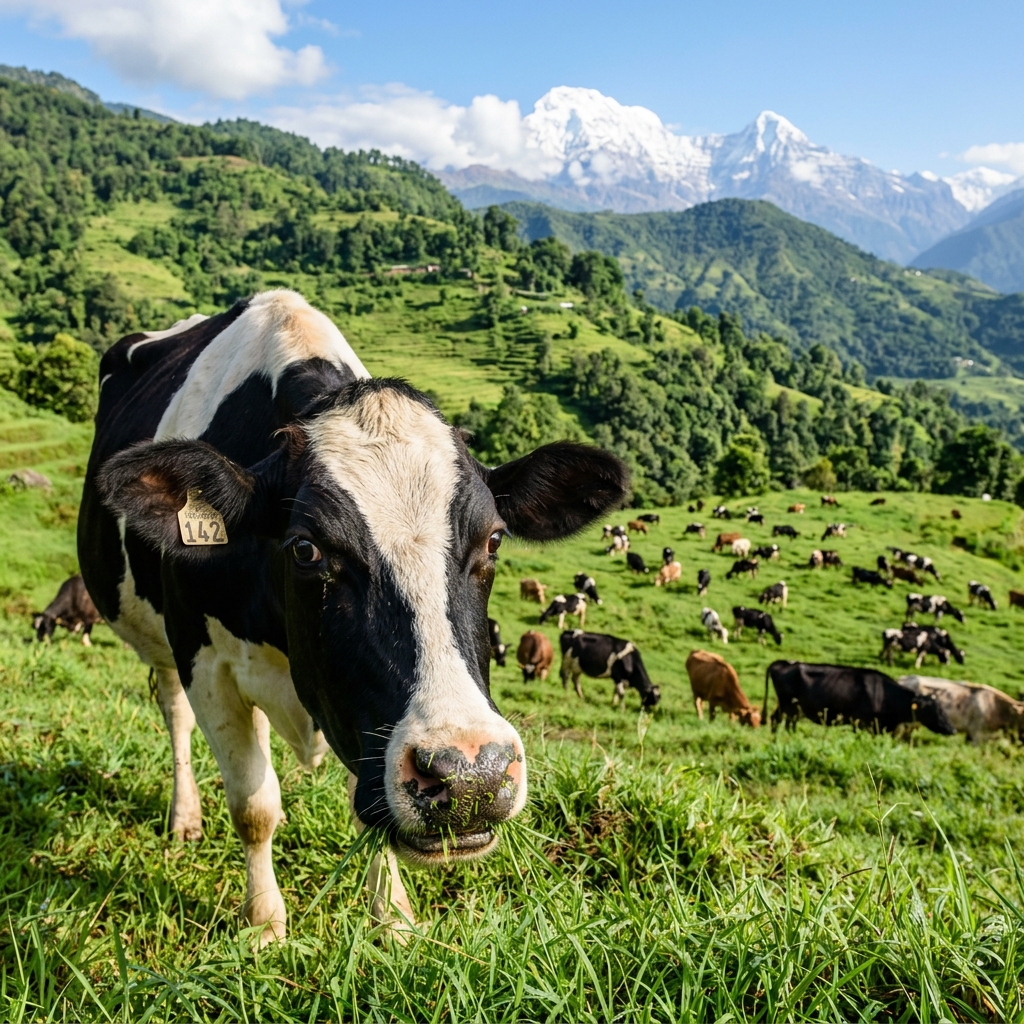
The inclusion of molasses gives this feed excellent palatability — especially valuable in Nepal's hilly regions where cattle can be selective eaters during dry winter months. At 18% crude protein, this feed meets the minimum protein requirement for lactating dairy cows in mid lactation — the phase when energy balance turns positive and cows are rebuilding body reserves.
- Mid lactation cows (weeks 16–30 post-calving)
- Dry cows in the last 3–4 weeks of pregnancy (pre-calving transition)
- Mixed herds where individual yield monitoring isn't practical
- Smallholder farms with 2–5 crossbred cows on moderate production (5–8 L/day)
Product 4: Siddhartha Cattle Feed — Best Budget-Friendly Maintenance Feed
The bottom line: Siddhartha Cattle Feed is the economical choice for general cattle maintenance, moderate-production cows, and farms where keeping feed costs low is the priority.
Siddhartha Cattle Feed — Nutritional Specifications
| Nutrient | Specification |
|---|---|
| Crude Protein | Min. 16% |
| Crude Fat | Min. 2.5% |
| Crude Fiber | Max. 14% |
| Moisture | Max. 11% |
Ingredients: Bran, Grain Screenings, Molasses, Mineral Mixture, Salt
Recommended Feeding Rate: 2–3 kg per day depending on body weight and yield
At 16% crude protein, Siddhartha sits at the minimum threshold for a lactating dairy cow. It's designed to be fed alongside ad-libitum quality roughage — if forage quality is high (berseem, young Napier grass), the overall diet protein can still be adequate for moderate-producing cows.
- Late-lactation cows (weeks 30+ post-calving, under 5 L/day)
- Dry cows in early dry period
- Young growing heifers (6 months to first calving)
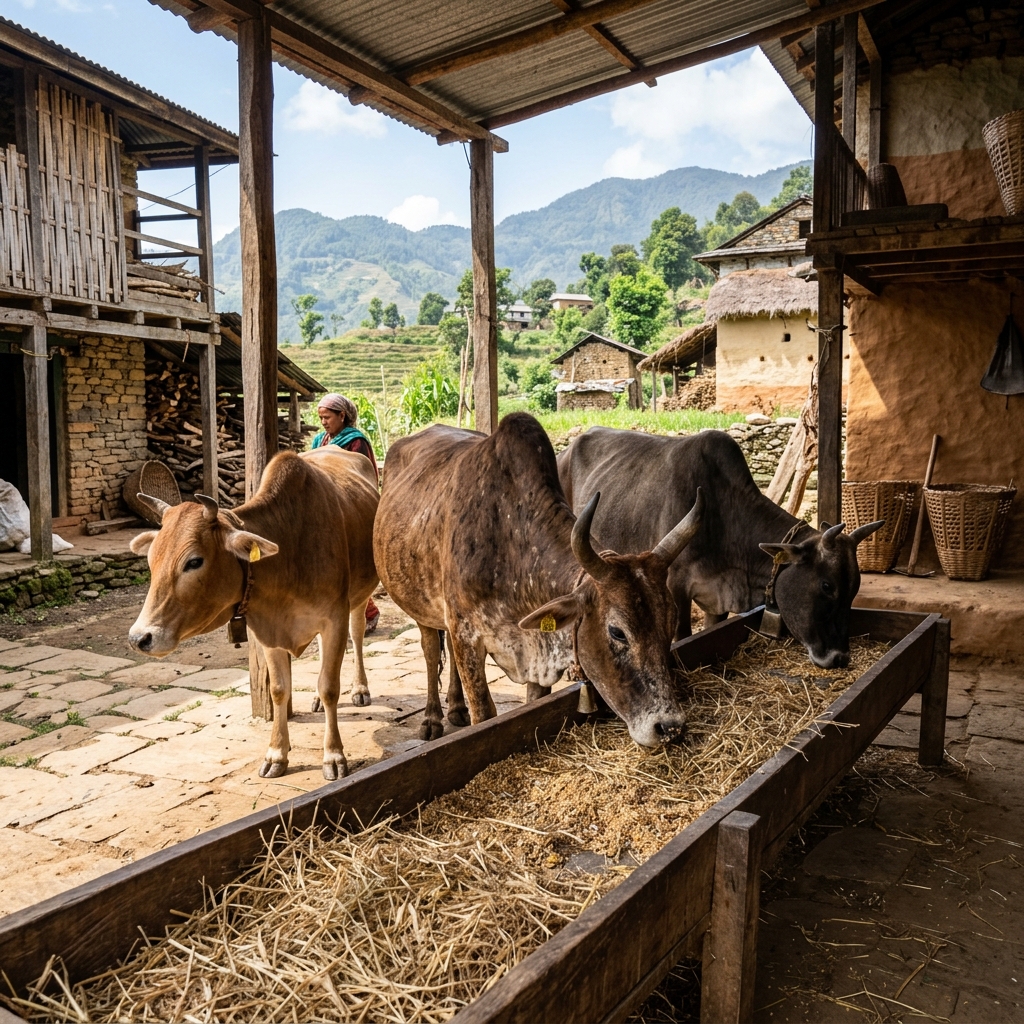
- Local breeds (Pahadi, Lulu, Tarai) on subsistence farms
Order Siddhartha Cattle Feed →
Side-by-Side Comparison: All 4 Products at a Glance
| Feature | HighPro | Bypass | Pashu Aahar | Siddhartha |
|---|---|---|---|---|
| Crude Protein | Min. 22% | Min. 20% | Min. 18% | Min. 16% |
| Best for | Peak lactation | Early lactation | Mid lactation | Maintenance |
Which Feed Is Right for Your Farm? — The Decision Guide
Choose Vanjula HighPro if: Your herd includes Jersey-cross or Holstein-Friesian crossbred cattle producing 8+ litres daily during early or peak lactation (first 16 weeks after calving). The 22% CP and built-in vitamin package delivers everything a high-producing cow needs in a single concentrate.
Choose Vanjula Bypass if: Your cows are producing decent volumes but struggling to maintain body condition, taking too long to come back into heat, or you're on a straw-heavy roughage base. The bypass protein technology maximises protein absorption from every kilogram of feed.
Note: For maximum performance, Vanjula HighPro and Vanjula Bypass can be used together in a 60/40 ratio during peak lactation.
Choose Vanjula Pashu Aahar if: You have a mixed herd at various lactation stages and want a single, reliable all-purpose feed. Excellent palatability (molasses-based) and 18% protein make it the right choice for mid-lactation crossbreds and pre-calving transition feeding.
Choose Siddhartha Cattle Feed if: Your primary goal is cost-effective maintenance — for late-lactation cows, dry cows, heifers, or local breeds on subsistence farms. It meets minimum protein requirements at a lower price point.
What Makes Nandani Agro Feeds Different From Homemade Rations?
Consistency is the core issue. When you buy bran from different suppliers, the crude protein can vary by 3–5 percentage points batch to batch. Your cow experiences this as a constantly shifting diet that her digestive system never fully adapts to. This "nutritional noise" alone suppresses milk yield by keeping the rumen microbiome in a state of constant adjustment.
A commercially manufactured feed like Vanjula uses fixed formulations and quality-controlled ingredient sources. Every bag delivers the same nutrient profile — which means your cow's rumen stabilises, dry matter intake increases, and milk production reaches a consistent plateau rather than fluctuating week to week.
Beyond consistency, commercial feeds offer:
- Pre-blended vitamins and minerals critical micronutrients that homemixed rations rarely include
- Appropriate calcium-phosphorus ratios to prevent milk fever and reproductive issues
- Quality-certified ingredients milled to optimal particle size for rumen fermentation
- Bypass protein technology — impossible to replicate economically at farm level
How to Transition Your Herd to a New Feed
Switching feeds abruptly can cause digestive upset, reduced intake, and a temporary drop in milk yield. Follow this transition protocol:
- Week 1: Replace 25% of current feed with the new Vanjula or Siddhartha product
- Week 2: Replace 50% (half-and-half mix)
- Week 3: Replace 75%
- Week 4 onwards: Full switch to new product
Monitor each cow's daily milk yield, dung consistency, and feed intake throughout. A slight initial drop in intake is normal; if intake doesn't recover by week 2, slow the transition pace.
Frequently Asked Questions
Which Vanjula feed gives the highest milk yield for crossbred cows?
Vanjula HighPro delivers the highest crude protein at 22% — the highest of any Nandani Agro product — specifically designed for peak-lactation crossbred cattle. For maximum results, combine it with Vanjula Bypass in a 60/40 ratio during the first 16 weeks post-calving. Nepalese field trials have shown bypass protein technology can lift daily milk yield by up to 28% compared to standard concentrate feeding (Nepalese Journal of Agricultural Sciences, 2013).
Can I feed Vanjula Pashu Aahar to local (Pahadi) cows?
Yes, but consider Siddhartha Cattle Feed first if your primary goal is cost management. Local breeds have lower genetic milk potential and lower daily nutrient requirements than crossbreds. Vanjula Pashu Aahar's 18% CP is more than adequate — but Siddhartha's 16% CP may be sufficient for maintenance and moderate production at a lower feed cost.
How much cattle feed does a 10-litre-per-day dairy cow need?
Using the Vanjula feeding formula of 400g concentrate per litre of milk + 1.5 kg maintenance: a 10L/day cow needs 4.0 kg (yield allowance) + 1.5 kg (maintenance) = 5.5 kg of concentrate per day. This is alongside 15–20 kg of good-quality green roughage and free-choice dry fodder. Always split the concentrate into 2–3 equal meals to prevent rumen acidosis.
Is commercial cattle feed worth the cost compared to homemixed rations?
In almost all cases, yes. At NPR 55–60 per litre of farm-gate milk, every extra litre per day earns you around NPR 1,600–1,800/month. If Vanjula HighPro delivers even 1–2 extra litres daily compared to a homemixed ration — a conservative estimate given the research — the feed cost is recovered several times over in milk revenue.
Where can I buy Vanjula and Siddhartha feed in Nepal?
Nandani Agro Industries supplies directly to farmers and through an authorised dealer network across Nepal. Contact them at +977-9801412266 or cattlefeednepal@gmail.com, or visit the factory at Omsatiya-2, Rupandehi, Nepal. Bulk orders and dealership enquiries are welcome.
Conclusion: The Right Feed for the Right Cow, at the Right Stage
Nepal's dairy sector will only close the gap with global productivity benchmarks if farmers move beyond generic, inconsistent homemixed rations. The good news is that the solution is available, proven, and locally manufactured.
Nandani Agro Industries' four-product range covers every stage of your herd's lactation cycle — from the premium protein power of Vanjula HighPro for peak-lactation crossbreds, to the smart bypass technology of Vanjula Bypass for maximum protein absorption, to the all-round reliability of Vanjula Pashu Aahar, and the cost-effective maintenance nutrition of Siddhartha Cattle Feed.
Ready to upgrade your herd's nutrition?
Contact Nandani Agro Industries at +977-9801412266 or cattlefeednepal@gmail.com to place a bulk order, find your nearest dealer, or get personalised feeding advice. Visit our full product range →
Sources: Nandani Agro Industries product specifications (cattlefeednepal.com); Nepalese Journal of Agricultural Sciences (Osti et al., 2013); Oregon State University Extension — Feeding the Dairy Cow During Lactation; Merck Veterinary Manual — Nutritional Requirements of Dairy Cattle (2025); National Cattle Research Program, Rampur, Chitwan; NARC Lamjung District Field Trial (2021).